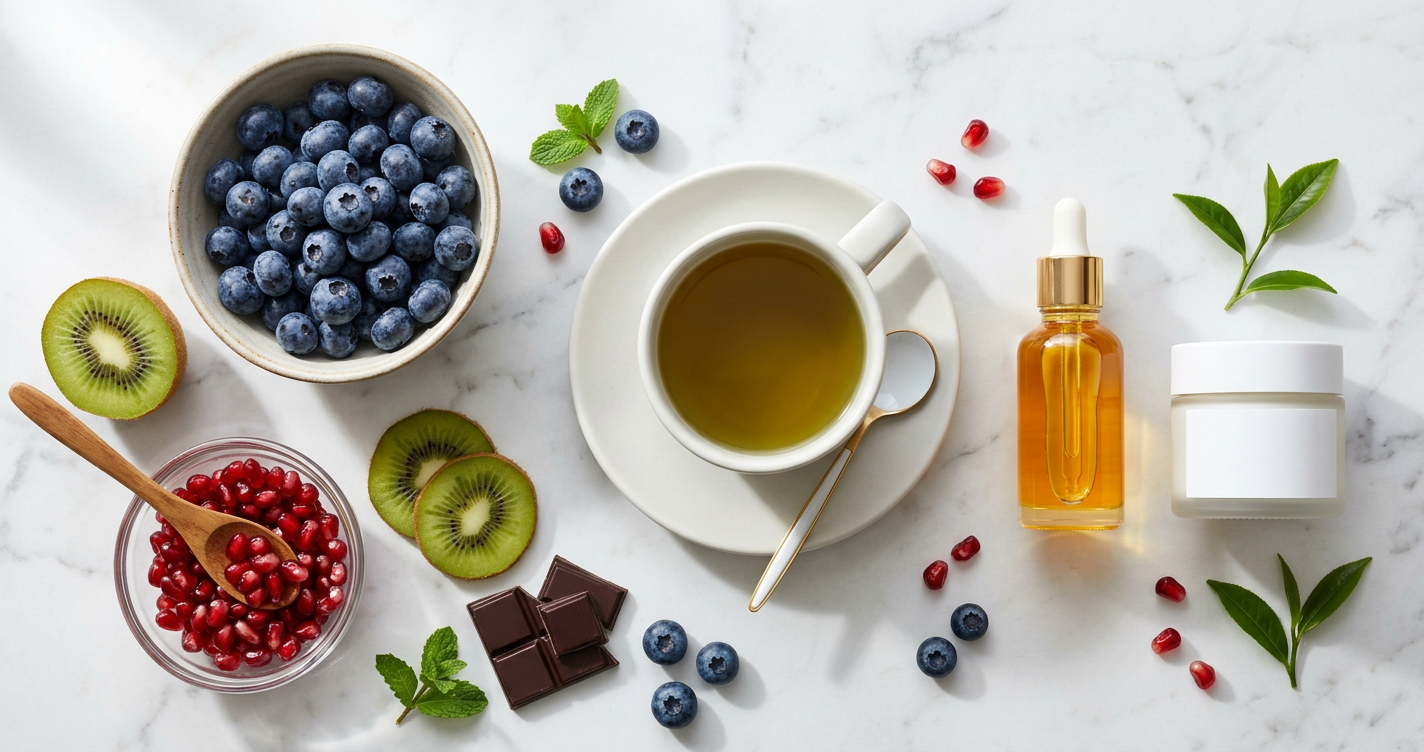
Have you ever wondered why some people look 40 at 50 – without any cosmetic procedures? A key factor is often found on their plate.
Antioxidants in food are tiny powerhouses that protect your body and skin from the inside out. Berries, leafy greens, nuts – if you know which foods are particularly rich in these protective compounds, you have a real advantage in everyday life.
Antioxidants neutralise free radicals – aggressive molecules that damage cells and accelerate skin ageing. When you regularly supply your body with antioxidant-rich foods, you are investing directly in radiant, youthful skin.
In this article, you will discover which foods deliver the most antioxidants, how they work, and how to combine nutrition and skincare effectively – for results you can truly see.
Antioxidants in Food: What Your Skin Truly Needs
Standing in front of the mirror in the morning – and there they are again: the first fine lines around your eyes, a tiredness in your complexion that no amount of sleep can fix. Perhaps you wonder in moments like these whether your diet plays a role.
The answer is: yes, and a bigger one than most people think.
Antioxidants in food are one of the most effective natural defence mechanisms you can give your skin. They neutralise free radicals – aggressive molecules caused by UV radiation, stress and environmental factors that accelerate skin ageing.
When you regularly supply your body with antioxidant-rich foods, you support skin health from the inside out: Your skin looks fresher, more radiant and more resilient.
The good news: You don't need to follow a strict diet or buy expensive superfoods. The most powerful antioxidants are often found in perfectly ordinary foods – you just need to know where to look.
What Are Antioxidants – and Why Are They So Important?
 Antioxidants are molecules that protect your body from an invisible yet constant process: oxidative stress. To understand why this matters so much for your skin, a brief look behind the scenes is worthwhile.
Every second, your body produces so-called free radicals – unstable molecules that are missing an electron. To stabilise themselves, they "steal" this electron from healthy cells. That sounds abstract, but the consequences are very real: cell membranes are damaged, collagen fibres are broken down, and skin renewal slows.
Free radicals are not only produced by natural metabolic processes. They are massively amplified by UV radiation, stress, lack of sleep, cigarette smoke and air pollution – factors that are virtually impossible to avoid in daily life.
Oxidative stress occurs when the number of free radicals overwhelms the body's own defence mechanisms – an imbalance that damages cells and visibly accelerates skin ageing.
This is precisely where antioxidants come in. They donate the missing electron to free radicals – while remaining stable themselves. This interrupts the chain reaction before cell damage can occur.
Your body does produce certain antioxidants on its own, but this capacity declines with age. At the same time, environmental stressors increase. The gap that emerges can be deliberately closed through the right diet.
Antioxidants from food – above all vitamin C, vitamin E, beta-carotene and polyphenols – provide your skin with exactly the cell protection it needs to stay resilient, radiant and youthful. Best of all: the most effective sources are not exotic superfoods, but ingredients you probably already have in your kitchen.
Free Radicals and Oxidative Stress: What Happens Inside Your Cells?
Your skin faces an invisible assault every day – and free radicals are the main culprits. Because they are missing an electron, they "steal" it from healthy cells, triggering a chain reaction:
- Cell membranes are damaged
- Collagen is broken down
- Skin renewal slows
These unstable molecules are not only generated by natural metabolic processes but are massively amplified by UV radiation, air pollution, stress and lack of sleep.
Oxidative stress is the term used when free radicals overwhelm the body's own defence mechanisms. This imbalance accelerates skin ageing at a cellular level – and is almost impossible to avoid entirely in everyday life. With age, the body's own antioxidant production also decreases, while external stressors continue to rise.
That is precisely why targeted cell protection is so crucial – and exactly where the power of antioxidants comes into play.
Types of Antioxidants: Vitamins, Phytonutrients and More
 The good news: nature has developed an impressive variety of protective compounds that neutralise free radicals before they can cause harm. Antioxidants are not a single uniform group – they differ in their chemical structure, how they work and where in the body they are most effective.
It is precisely this diversity that makes them so powerful: different types of antioxidants complement each other and protect your skin on multiple levels simultaneously.
| Antioxidant Type | Examples | Effect on the Skin | Best Sources |
|---|---|---|---|
| Vitamin C | Ascorbic acid, ascorbyl palmitate | Inhibits melanin production, promotes collagen synthesis, neutralises free radicals in the aqueous parts of cells | Rosehip, sea buckthorn, citrus fruits, peppers, kiwi |
| Vitamin E | Tocopherol, tocotrienol | Protects cell membranes from lipid peroxidation, has anti-inflammatory properties, regenerates vitamin C | Wheatgerm oil, almonds, sunflower seeds, avocado |
| Polyphenols & Flavonoids | Resveratrol, quercetin, EGCG (green tea), anthocyanins | Reduce inflammatory responses, protect against UV-induced cell stress, support the skin barrier | Berries, red wine, green tea, dark chocolate, onions |
| Carotenoids | Beta-carotene, lycopene, astaxanthin | Protect against light-induced skin ageing, promote an even skin tone, have anti-inflammatory effects | Carrots, tomatoes, sweet potatoes, pink grapefruit |
Good to know: Vitamin C and vitamin E work synergistically – they regenerate each other and together provide stronger protection than either one alone.
The beauty of it: you don't need to be a nutrition expert to benefit from this variety. Colourful plant-based foods – red, orange, purple, dark green – are almost always rich in one or more of these antioxidant categories.
The more colourful your plate, the broader your natural cell protection.
Vitamin C and Vitamin E: The Classic Duo for Firm Skin
Vitamin C and vitamin E are among the most thoroughly researched antioxidants – and for good reason. Vitamin C is essential for collagen production: without sufficient ascorbic acid, your body simply cannot produce enough of the structural proteins that keep your skin firm and elastic.
At the same time, it neutralises free radicals in the aqueous parts of cells and inhibits excess melanin production, which leads to uneven skin tone.
Vitamin E plays a complementary role: it protects the lipid-rich cell membranes from oxidative breakdown and has anti-inflammatory effects. Particularly valuable is its ability to regenerate spent vitamin C – the two vitamins thus extend each other's duration of action.
For skin ageing, this means: regularly consuming both protects your skin on multiple levels simultaneously.
Top Antioxidant Foods: 10 You Should Know
 The ORAC value (Oxygen Radical Absorbance Capacity) measures how effectively a food neutralises free radicals – the higher, the better for your skin. These ten antioxidant-rich foods should be on your shopping list:
Blueberries & Açaí Berries – Both belong to the absolute elite among berries, achieving exceptionally high ORAC values. Their anthocyanins protect collagen from oxidative breakdown and promote an even skin tone.
Pomegranate – Rich in punicalagin, one of the most powerful known plant-based antioxidants. Studies show that pomegranate extract supports cell regeneration and improves skin elasticity.
Green Tea – Contains EGCG (epigallocatechin gallate), which has anti-inflammatory effects both internally and externally. Just two cups a day make a measurable contribution to protection against UV-induced skin ageing.
Tomatoes – Their red colour comes from lycopene, a fat-soluble carotenoid with pronounced antioxidant activity. Cooked tomatoes (e.g. passata or tomato sauce) actually deliver more bioavailable lycopene than raw ones.
Walnuts & Almonds – These nuts score simultaneously with vitamin E, selenium and omega-3 fatty acids. A small handful each day is enough to sustainably protect your cell membranes.
Broccoli – One of the most nutrient-dense plant-based foods overall: vitamin C, sulforaphane and lutein work together against oxidative stress. Lightly steamed, it reaches its full potential.
Dark Chocolate (70% Cocoa or Above) – Flavanols improve blood circulation to the skin and protect against light-induced damage. A small piece of quality Swiss chocolate is, in fact, skincare.
Swiss Apples & Elderberries – Both are regional, seasonal and underrated. Swiss organic apples provide quercetin, while elderberries deliver impressive amounts of vitamin C and anthocyanins – ideal for a sustainable, locally oriented diet.
Combine as many of these fruits and vegetables as possible every day – variety matters more than perfection.
Seasonal Antioxidant Sources from Switzerland
Shopping seasonally pays off twice: fresher nutrients and a smaller ecological footprint. These plant-based foods from Switzerland and the surrounding region supply you with antioxidants exactly when your skin needs them most:
- Spring – Wild garlic and young spinach kick off the season with vitamin C, lutein and chlorophyll – perfect after the long winter.
- Summer – Swiss strawberries, raspberries and blueberries from the Mittelland rank among the most antioxidant-rich berries of all; add garden tomatoes and courgettes.
- Autumn – Elderberries, rosehips and Swiss organic apples deliver quercetin, anthocyanins and exceptionally high amounts of vitamin C from locally grown fruit and vegetables.
- Winter – Brussels sprouts, kale and beetroot keep the antioxidant supply going even in the cold months.
- Year-round – Walnuts from the Valais and dried elderberries round out your diet when fresh antioxidant-rich food is taking a break.
Eating seasonally and regionally is the simplest way to continuously do something good for your skin.
Antioxidants and Skin Health: What Science Says
Oxidative stress is now regarded as one of the main drivers of skin ageing – and the research is clear. Free radicals generated by UV radiation, air pollution and everyday stress attack skin cells and damage DNA. The result: accelerated breakdown of collagen and elastin, fine lines, age spots and a duller complexion.
Studies show that vitamin C not only neutralises free radicals but also directly participates in collagen synthesis – it is an indispensable cofactor for the enzymes that build collagen. (Source: Pullar et al., Nutrients, 2017)
The same applies to polyphenols such as quercetin and anthocyanins: several clinical studies confirm that regular intake measurably improves cell protection and dampens inflammatory processes in the skin. Skin health is therefore not a matter of chance – it can be actively influenced.
The exciting part: antioxidants do not only work from within. Applied topically – directly onto the skin – they can also counteract oxidative damage and strengthen the skin barrier. Active ingredients such as Centella Asiatica and hyaluronic acid combine this protective effect with targeted hydration.
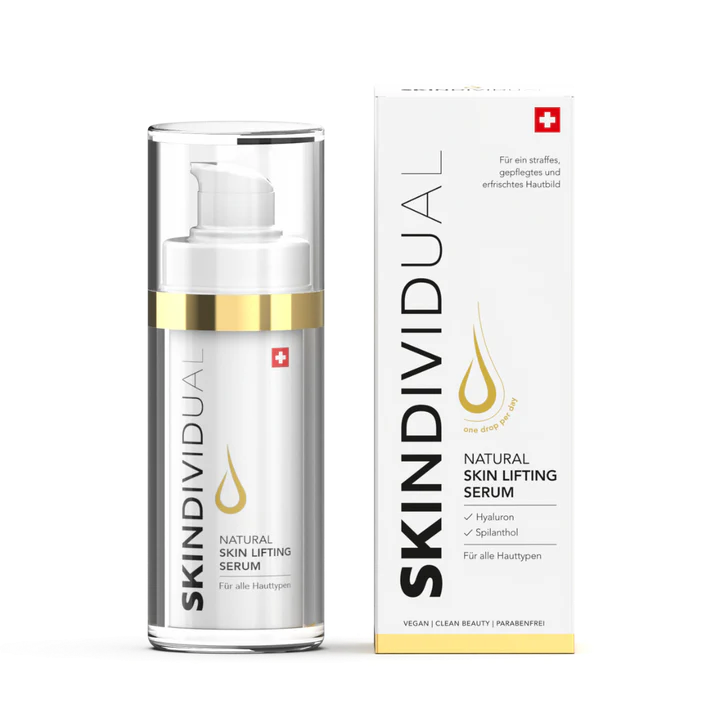
The Natural Skin Lifting Serum from SKINDIVIDUAL unites precisely these kinds of active ingredients – science-based, gentle on the skin and Swiss Made. Because the best routine works from both the inside and outside.
Antioxidants for Different Skin Types: What to Keep in Mind
Not every skin type responds the same way to antioxidants – and that is a good thing, because it means you can truly tailor your care to your needs:
- Dry skin benefits particularly from vitamin E and hyaluronic acid: both protect the skin barrier whilst providing intensive hydration – a genuine double effect for cell protection.
- Oily and blemish-prone skin tolerates light, water-soluble antioxidants such as vitamin C or niacinamide especially well – they regulate sebum production and protect against oxidative stress without clogging pores.
- Mature skin needs strong allies against ageing: polyphenols, Centella Asiatica and vitamin C work synergistically here – they promote collagen synthesis and visibly improve skin health.
- Sensitive skin is better off with gentle botanical actives such as Centella Asiatica, which calm inflammatory reactions rather than causing irritation.
- Combination skin benefits from balanced formulations that deliver protection and hydration precisely where they are needed.
How to Get Your Antioxidants: Combining Diet, Supplements and Skincare
The most effective protection against oxidative stress does not come from a single measure but from the interplay of diet, targeted supplementation and topical skincare. These three pillars complement each other – and that is exactly what makes the difference.
Eat colourfully, protect comprehensively
Antioxidants from food form the foundation. Fruit and vegetables of all colours supply you with a broad spectrum of protective compounds:
- Berries, peppers, spinach, carrots and citrus fruits cover different mechanisms of action
- Green tea, nuts and high-quality olive oil round out a skin-friendly diet
The rule of thumb is simple: the more colourful your plate, the broader your antioxidant protection.
When supplements make sense
It is not always possible to meet your needs through diet alone – whether due to stress, seasonal fluctuations or increased skin demands. In these cases, targeted supplements can help.
The Skin, Hair, Nails Complex from SKINDIVIDUAL combines relevant micronutrients such as biotin and collagen, supporting skin health from within. Important: Supplements do not replace a balanced diet – they fill the gaps where they arise.
Topical care as the third pillar
Orally consumed antioxidants reach the skin via the bloodstream – topically applied ones act directly where external factors such as UV radiation and pollution take their toll.
The Natural Skin Lifting Serum from SKINDIVIDUAL combines antioxidant actives like Centella Asiatica with skin-firming ingredients, targeting precisely where the skin is challenged daily.
The combination of oral and topical antioxidants protects the skin on two pathways simultaneously – from the inside and the outside.
When you consciously use all three pillars, you give your skin the most complete protection that natural skincare can offer.
Supplements vs. Natural Intake: Which Is Better?
A balanced diet rich in antioxidant foods forms the best foundation for healthy skin – vitamin C sources such as citrus fruits and peppers, vitamin E from nuts and olive oil. In most cases, that is perfectly sufficient.
However, stress, seasonal fluctuations or increased demand can create gaps that are difficult to close through food alone. This is precisely where supplements come in – not as a replacement, but as a targeted addition.
The Skin, Hair, Nails Complex from SKINDIVIDUAL delivers relevant micronutrients like biotin and collagen where diet reaches its limits. The rule of thumb: eat colourfully first, then supplement strategically.
Antioxidants in Skincare: Working from the Inside and Outside
Antioxidants are most effective when they reach the skin from both the inside and outside. While a nutrient-rich diet lays the foundation for cell protection and skin health, topical care can target precisely where environmental stressors challenge the skin daily.
High-quality serums with antioxidant actives form a protective barrier against free radicals – those main drivers of skin ageing. The Natural Skin Lifting Serum from SKINDIVIDUAL combines Spilanthol with nourishing actives that visibly firm and strengthen the skin.
This creates a double shield: diet nourishes the cells from within, whilst targeted care protects and regenerates from the outside. Both approaches together unfold their full effect.
Frequently Asked Questions
Which food has the most antioxidants?
Wild blueberries, açaí berries and dark chocolate are among the most antioxidant-rich foods of all. Spices such as turmeric and cinnamon as well as green tea also deliver impressively high amounts of protective phytonutrients.
How many antioxidants do I need each day?
There is no universal daily dose, as different antioxidants work in different ways. As a rule of thumb: five portions of colourful fruit and vegetables per day cover the basic requirement well and sustainably support your cell protection.
Can antioxidants really slow down skin ageing?
Yes – oxidative stress caused by free radicals is one of the main drivers of premature skin ageing. Antioxidants neutralise these free radicals and thus protect the skin's collagen structure, contributing to a more even and radiant complexion in the long term.
What is the ORAC value?
The ORAC value (Oxygen Radical Absorbance Capacity) measures the antioxidant capacity of a food – in other words, how effectively it can neutralise free radicals. The higher the ORAC value, the stronger the food's protective effect.
Are antioxidant supplements worthwhile?
Supplements can be worthwhile when the diet has gaps or the body is exposed to increased stress.
The [Skin, Hair, Nails Complex](https://skindividual.ch) from SKINDIVIDUAL delivers targeted nutrients such as biotin and vitamin C that support skin health from within – as an ideal complement to a balanced diet.