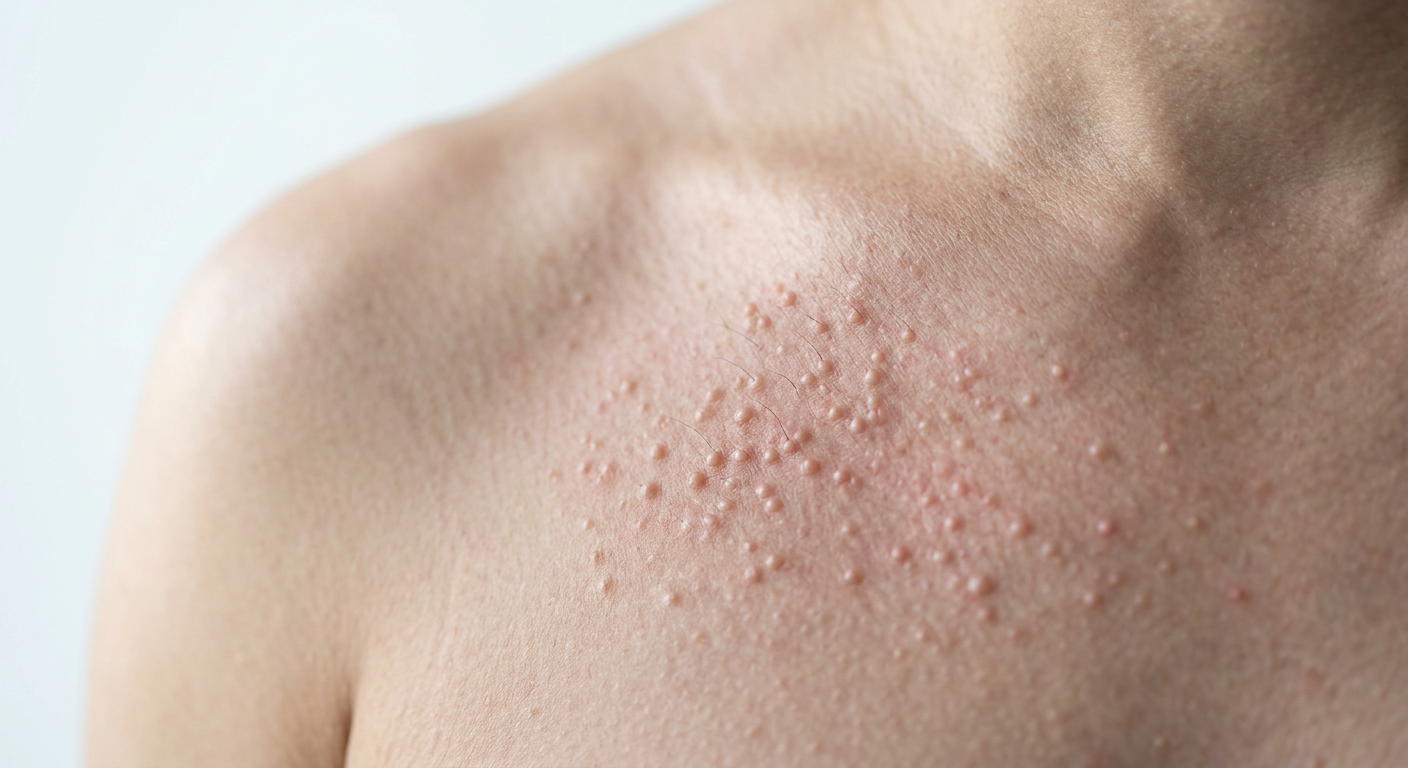
You take care of your skin regularly, try product after product – and yet those stubborn, itchy pimples just won't go away? Then fungal acne might be the reason.
Although it looks like ordinary acne at first glance, a completely different trigger is behind it: a yeast called Malassezia that lives on every skin but can get out of control under certain conditions.
The tricky part: Many classic acne products don't just do little for fungal acne – they can actually make the situation worse. That's why it's so important to know the difference and act specifically.
In this article, you'll learn how to recognise fungal acne, what triggers it and which skincare truly helps – so your skin can finally breathe again.
Fungal Acne: When Pimples Itch and Won't Go Away
You care for your skin diligently, using cleansers, toners, maybe even an acne gel – and yet those small, itchy pimples on your forehead simply refuse to disappear. They sit there, as stubborn as ever, sometimes even in uniform rows.
If this sounds familiar, you're not alone – and above all: You're not doing anything wrong.
Fungal acne looks like regular acne – but it's an entirely different issue.
What many don't know: behind itchy little pimples on the forehead, there's often no classic acne at all, but a so-called fungal acne – medically known as Malassezia folliculitis.
This is not caused by bacteria, but by yeast fungi that naturally live on your skin. When they fall out of balance, they can colonise hair follicles and cause exactly those stubborn, itchy pimples.
That explains why conventional acne products simply remain ineffective – they miss the actual problem entirely.
Recognising fungal acne correctly is therefore the first and most crucial step towards improving your skin.
What Exactly Is Fungal Acne?
 Fungal acne is the colloquial term for a skin condition medically known as Malassezia folliculitis or Pityrosporum folliculitis. Both names mean the same thing: an inflammation of hair follicles caused not by bacteria, but by a yeast fungus.
This yeast is called Malassezia – and it's no intruder from outside. Malassezia is part of the natural skin flora and lives on virtually every person's skin, completely harmlessly. Only when the microbial balance tips – for example due to heat, sweating, antibiotics or certain skincare products – can the fungus multiply excessively and become a problem.
What happens then takes place directly in the hair follicle: Malassezia feeds on fatty acids produced by the sebaceous glands. When it multiplies uncontrollably, it penetrates the follicular canal and triggers an inflammatory reaction there.
The result is small, uniform pustules – often on the forehead, temples, chest or back – that feel inflamed and frequently itch. This itching is precisely the key distinguishing feature from classic acne.
Because fungal acne and bacterial acne look deceptively similar but have completely different causes. While classic acne centres on the bacterium Cutibacterium acnes, in yeast acne a fungus is the trigger. That explains why conventional anti-acne products simply don't work for fungal acne – they target bacteria and leave the fungal infection in the hair follicle untouched.
The good news: once you know what you're truly dealing with, you can act specifically – and finally support your skin sustainably.
Malassezia: The Yeast That Lives on Your Skin
Malassezia is no enemy – it's a permanent resident of your skin. This yeast belongs to the natural skin microbiome and lives peacefully on virtually every person's skin surface, especially where sebaceous glands are active: face, chest, back.
The problem arises not from the fungus itself, but from an imbalance. Certain factors can disrupt the microbial equilibrium:
- Heat and humidity
- Antibiotics
- Hormonal fluctuations
- Oil-rich skincare products
When this happens, Malassezia multiplies uncontrollably. It feeds on fatty acids in the sebum and penetrates the hair follicle. There it triggers an inflammatory reaction visible as a fungal infection: small, uniform pustules with typical itching.
Malassezia is not a weakness of your skin, but a biological balance problem – and precisely therefore solvable.
How to Recognise Fungal Acne: Telling It Apart from Regular Acne
 Many people treat their skin blemishes for months with classic acne products – without success. The reason: what looks like normal acne can be fungal acne. And it works by completely different rules.
Typical symptoms of fungal acne at a glance:
- Uniform, small papules and pustules (all similar in size)
- Pronounced itching – the most important distinguishing feature
- Preferred locations: forehead, back, chest, shoulders
- Worsening due to heat, sweating or oily skincare products
- Hardly any response to classic acne treatments – often even worsening
This last point is crucial: Many conventional acne products contain ingredients that serve as a food source for Malassezia. Certain fatty acids and oils can actively promote fungal growth – making the problem worse, not better.
| Feature | Fungal Acne | Hormonal Acne | Bacterial Acne |
|---|---|---|---|
| Cause | Malassezia overgrowth | Hormonal fluctuations | Propionibacterium acnes |
| Appearance | Uniform small papules/pustules | Deep cysts, comedones | Mixed: blackheads, pustules, cysts |
| Location | Forehead, back, chest, shoulders | Chin, jawline, cheeks | Face, back, décolleté |
| Itching | ✓ Frequently present | ✗ Rarely | ✗ Rarely |
| Response to acne products | Often no effect or negative | Partially effective | Usually effective |
| Diagnosis | Dermatologist | Dermatologist | Dermatologist |
Important: A reliable diagnosis can only be made by a specialist. If you're unsure about itchy pimples on your forehead or uniform pustules on your back, it's worth booking an appointment with a dermatologist – ideally before trying more products.
Fungal acne doesn't respond to benzoyl peroxide or salicylic acid, because these active ingredients target bacteria, not yeasts. Those who don't know this treat the wrong problem for months – and wonder why nothing changes.
The good news: Once you know what you're truly dealing with, you can act specifically.
Typical Symptoms of Malassezia Folliculitis
If you're not sure whether your skin blemishes really are acne, these typical symptoms of Malassezia folliculitis can help you assess better:
- Uniform, small papules – all pimples look nearly identical, with similar size and shape
- Itching – the most noticeable feature; usually absent with bacterial acne
- Itchy small pimples on the forehead – one of the most common locations, often along the hairline
- Other typical areas: back, chest and shoulders
- Worsening after exercise or in heat and humidity
- Hardly any improvement despite classic acne treatments – sometimes even irritation
- Oil-containing skincare products noticeably worsen Malassezia folliculitis
The more of these points apply to you, the more likely it is that you're dealing with fungal acne.
Fungal Acne vs. Hormonal Acne: The Key Differences
Not every breakout is the same – and that's precisely why it's worth taking a closer look before reaching for the wrong skincare.
| Feature | Fungal Acne (Malassezia) | Hormonal Acne |
|---|---|---|
| Cause | Yeast fungus (Malassezia) | Hormonal fluctuations |
| Appearance | Uniform, small papules | Varying sizes, often cysts |
| Itching | Frequently present | Rarely |
| Typical locations | Forehead, chest, back | Chin, jawline, cheeks |
| Reaction to oils | Worsens | Usually no direct reaction |
| Diagnosis | Antifungal treatment helps | Responds to hormonal regulation |
The difference between fungal acne and hormonal acne comes down primarily to cause and location. Diagnosis becomes easier when you know what to look for – when in doubt, a visit to a dermatologist is always worthwhile.
Causes and Triggers: Why Does Fungal Acne Develop?
 Sometimes a single trigger is enough to tip the delicate balance on your skin – and suddenly Malassezia, a yeast that normally lives on every skin, has the upper hand.
It's not dirt or poor hygiene that's to blame – fungal acne develops when the balance on the skin tips.
The most common causes and triggers at a glance:
- Antibiotic use: Antibiotics don't just fight harmful bacteria – they also destroy the beneficial ones. Without the natural bacterial flora, the yeast can spread unchecked – one of the most common causes of fungal acne.
- Sweating and moisture: Warm, moist conditions are the ideal environment for Malassezia. The risk of a skin fungal infection rises noticeably, especially after exercise or during hot summer months.
- Tight, synthetic clothing: Wearing tight-fitting sportswear frequently creates a warm, humid microclimate directly on the skin – another classic trigger.
- Weakened immune system: Stress, sleep deprivation or illness weaken the body's natural defences and make the skin more susceptible to yeast overgrowth.
- Oily skincare products with certain fatty acids: Malassezia feeds on lipids – particularly fatty acids like linoleic acid or oleic acid. Rich creams or oils containing these ingredients can promote or worsen fungal acne.
- Diet: A high-sugar diet and consumption of yeast – such as in bread or beer – can further promote Malassezia growth.
- Seasonal factors: In summer, heat and sweating create a moist skin climate. In winter, dry heating air weakens the skin's protective barrier and makes it more permeable to fungal infections. Both seasons carry their own risks.
When you know your personal triggers, you can take targeted countermeasures – with the right skincare routine and conscious daily habits.
Diet and Lifestyle: What Promotes Malassezia
What you eat and how you live has more influence on Malassezia than you might think – and small everyday adjustments can make a big difference.
- Sugar and yeast products: A high-sugar diet plus yeast in bread, beer or wine provide the fungus with ideal growth conditions. Less of these literally takes away its food.
- Alcohol: It weakens the immune system and promotes inflammatory reactions – both make the skin more susceptible to fungal acne.
- Saturated fats: Fried and highly processed foods can shift the skin's environment and promote Malassezia.
- Sleep deprivation and chronic stress: Both weaken the skin barrier and give the yeast more room.
- Tight sportswear after training: Warm moisture directly on the skin is a classic trigger. Showering quickly after exercise and wearing loose clothing helps noticeably.
- Low fibre intake: A gut-friendly diet rich in vegetables and fermented foods strengthens the microbiome – and therefore also the skin's resistance.
Treating Fungal Acne: What Really Works
If you know that Malassezia is behind your skin problems, that's actually good news – because fungal acne can be treated specifically.
The crucial difference from bacterial acne: Conventional acne products don't help here – sometimes they even make the situation worse. What truly works is a two-step approach combining medical treatment with the right skincare routine.
Medical treatment: The first step
For confirmed Malassezia folliculitis, antifungal agents are the treatment of choice. Ketoconazole has proven particularly effective – an antifungal active ingredient that specifically targets yeast fungi.
Ketoconazole shampoo isn't just used for hair: applied as a wash on affected areas, left briefly and then rinsed off – that's a classic recommendation for fungal acne. Active ingredients like zinc pyrithione and sulphur also have antifungal properties and can noticeably improve the situation.
For persistent or extensive cases, oral antifungal agents may be needed – but that's a matter for a dermatologist. If you're unsure or your skin isn't improving despite adjustments, seeing a specialist is definitely worthwhile.
Skincare support: Making the treatment last
Medical treatment alone is often not enough – the right skincare makes the difference between short-term relief and long-term improvement.
During treatment, avoid oil-rich creams and potentially problematic ingredients. Instead, opt for light, non-comedogenic textures and gentle cleansing – for example with a micellar water that cleanses the skin without stressing the barrier.
The combination of targeted antifungal treatment and a fungal acne-friendly skincare routine is the most effective strategy against fungal acne – not one or the other alone.
Medical Options: Antifungal Agents and Ketoconazole
If a fungal infection is behind your skin problems, antifungal agents are the first choice – and that's good news, because it gives you a clear target.
Ketoconazole has proven particularly effective: this antifungal active ingredient specifically targets yeast fungi and is often applied as a wash on affected skin areas, left briefly and then rinsed off. Zinc pyrithione and sulphur also have antifungal properties and can noticeably improve the situation.
For persistent cases, oral antifungal agents may be considered – but this is always decided by a dermatologist. If you're unsure about the diagnosis or your skin isn't responding despite adjustments, seeing a specialist is the right next step. Professional treatment saves time, money and frustration in the long run.
Long-Term Prevention: Keeping Fungal Acne Away
Once you've successfully treated fungal acne, it's worth integrating a few simple habits into your daily routine – to keep Malassezia in check long-term:
- Wear breathable, loose clothing, especially during exercise
- Shower off sweat quickly – the yeast loves warm moisture
- Choose light, oil-free skincare that doesn't feed Malassezia
- Watch out for ingredients like esters and certain oils in products
- Support gut health – a balanced diet strengthens the skin microbiome
- Establish a regular prevention routine with skin-friendly cleansing
- React immediately at the first signs, rather than waiting
Fungal Acne Safe Skincare: Ingredients You Need to Know
The good news first: You don't have to give up skincare just because you're prone to fungal acne. You just need to know which ingredients fuel Malassezia – and which are good for your skin without irritating the yeast.
Ingredients to AVOID with Fungal Acne
| Ingredient | Why problematic? | Commonly found in… |
|---|---|---|
| Oleic Acid | Preferred food source for Malassezia | Olive oil, argan oil, jojoba oil |
| Lauric Acid | Promotes fungal growth | Coconut oil, palm kernel oil |
| Myristic Acid | Malassezia-friendly fatty acid | Coconut oil, shea butter, dairy products |
| Palmitic Acid | Metabolised by Malassezia | Palm oil, many conventional creams |
| Esters (e.g. Isopropyl Myristate) | Synthetic fatty acid derivatives – also fungal food | Many moisturisers, primers |
| Fermented yeast extracts | Can directly stimulate Malassezia | Some glow serums, essences |
Ingredients SAFE for Fungal Acne
| Ingredient | Why suitable? | Typical products |
|---|---|---|
| Squalane | Skin-identical, non-fatty-acid-based lipid source | Light serums, oils |
| Niacinamide | Regulates sebum, soothes redness | Serums, toners |
| Hyaluronic Acid | Moisture care without fatty acids | Moisturisers, eye gels |
| Glycerin | Attracts moisture, not fungal food | Nearly all skin-friendly formulations |
| Centella Asiatica | Soothes, strengthens the skin barrier | Calming serums, creams |
| Zinc Oxide | Antimicrobial, ideal in mineral sunscreen for fungal acne | Mineral sunscreens |
Reading the INCI List – Here's How
When shopping, a quick INCI check is worthwhile: ingredients are listed in descending order of concentration on packaging. If problematic fatty acids like Lauric Acid or Oleic Acid appear near the top, it's better to pass.
Mineral sunscreens with zinc oxide are often far better tolerated with fungal acne than chemical filters – a small switch with a big impact.
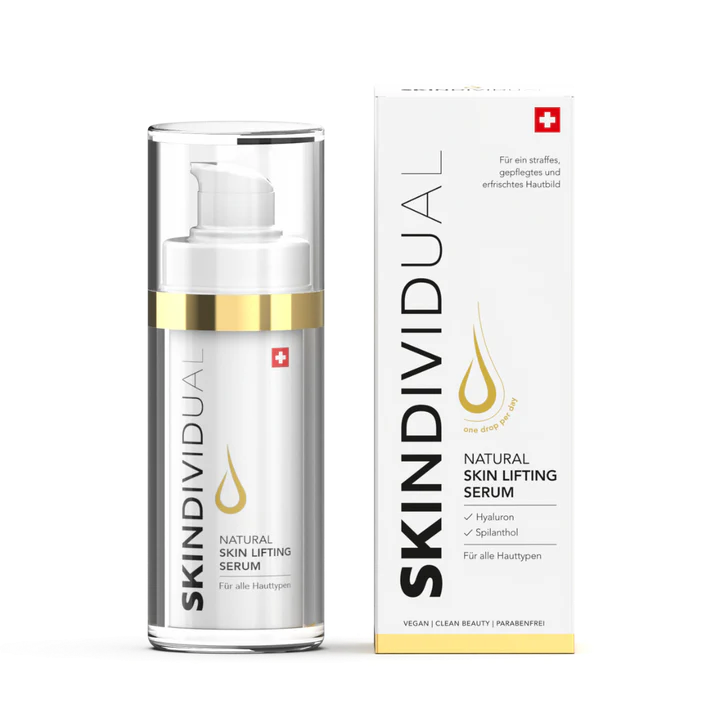
The Natural Skin Lifting Serum and the Hyaluronic Eye Gel Roll-On from SKINDIVIDUAL use active ingredients like hyaluronic acid and Centella Asiatica – without the typical Malassezia triggers. The Micellar Water is also ideal for a gentle, fungal acne safe cleansing routine that won't throw your skin microbiome off balance.
Ingredients to Avoid: Malassezia Food in INCI
When reading the INCI list, the rule is: what appears at the top is present in the highest concentration – and therefore particularly relevant if you want to keep fungal acne under control.
These ingredients should be consistently avoided with a Malassezia tendency:
- Oleic Acid – preferred food source for Malassezia, commonly found in olive and argan oil
- Lauric Acid – promotes fungal growth, often found in coconut oil
- Myristic Acid – Malassezia-friendly, typical in shea butter and coconut oil
- Palmitic Acid – directly metabolised by Malassezia
- Esters such as Isopropyl Myristate – synthetic fatty acid derivatives, also fungal food
- Fermented yeast extracts – can directly stimulate Malassezia
Are these classics high up on the INCI list? Then reach for the next option instead.
Fungal Acne Safe: Active Ingredients That Benefit Your Skin
The good news: there are many wonderful active ingredients that are fungal acne safe and give your skin genuine care – without fuelling Malassezia:
- Hyaluronic Acid – binds moisture intensively without delivering fatty acids; ideal in any fungal acne safe moisturiser
- Niacinamide – regulates sebum, soothes redness and strengthens the skin barrier
- Centella Asiatica – botanical all-rounder that reduces inflammation and regenerates the skin
- Spilanthol – natural active ingredient with smoothing effects, contained in the Natural Skin Lifting Serum
- Glycerin – draws moisture into the skin, fungus-neutral and well-tolerated
- Zinc Oxide – antimicrobial, soothing, particularly valuable for irritated skin
Ready to get started? Discover the SKINDIVIDUAL fungal acne products – formulated with care, Swiss Made and free from problematic fatty acids.
Frequently Asked Questions
Why do my pimples on the forehead itch?
Itchy pimples on the forehead are a classic sign of Malassezia folliculitis – also known as fungal acne. Unlike bacterial acne, it's caused by an overgrowth of yeast fungi in the hair follicles, which triggers the typical itching.
Can I wear make-up with fungal acne?
Yes – but choose specifically fungal acne safe products that contain no fatty acids or oils that feed Malassezia. Mineral foundations based on zinc oxide are often a good choice.
How long does fungal acne treatment take?
With the right fungal acne skincare routine, you'll usually see initial improvements after 4–8 weeks. Consistency is key – stick with it.
Is fungal acne contagious?
No. Malassezia is a natural part of every person's skin flora and is not transmitted from person to person.
Which sunscreen is suitable for fungal acne?
For fungal acne-prone skin, opt for mineral formulas with zinc oxide or titanium dioxide – these are light, oil-free and considered fungal acne safe.
How do I build a fungal acne safe skincare routine?
Build a simple routine with four pillars:
- Gentle cleansing as the foundation - Hyaluronic acid for hydration - Niacinamide for sebum regulation - Mineral sunscreen to finish
The [Natural Skin Lifting Serum](https://skindividual.ch) with Spilanthol and Centella Asiatica integrates perfectly into this routine.