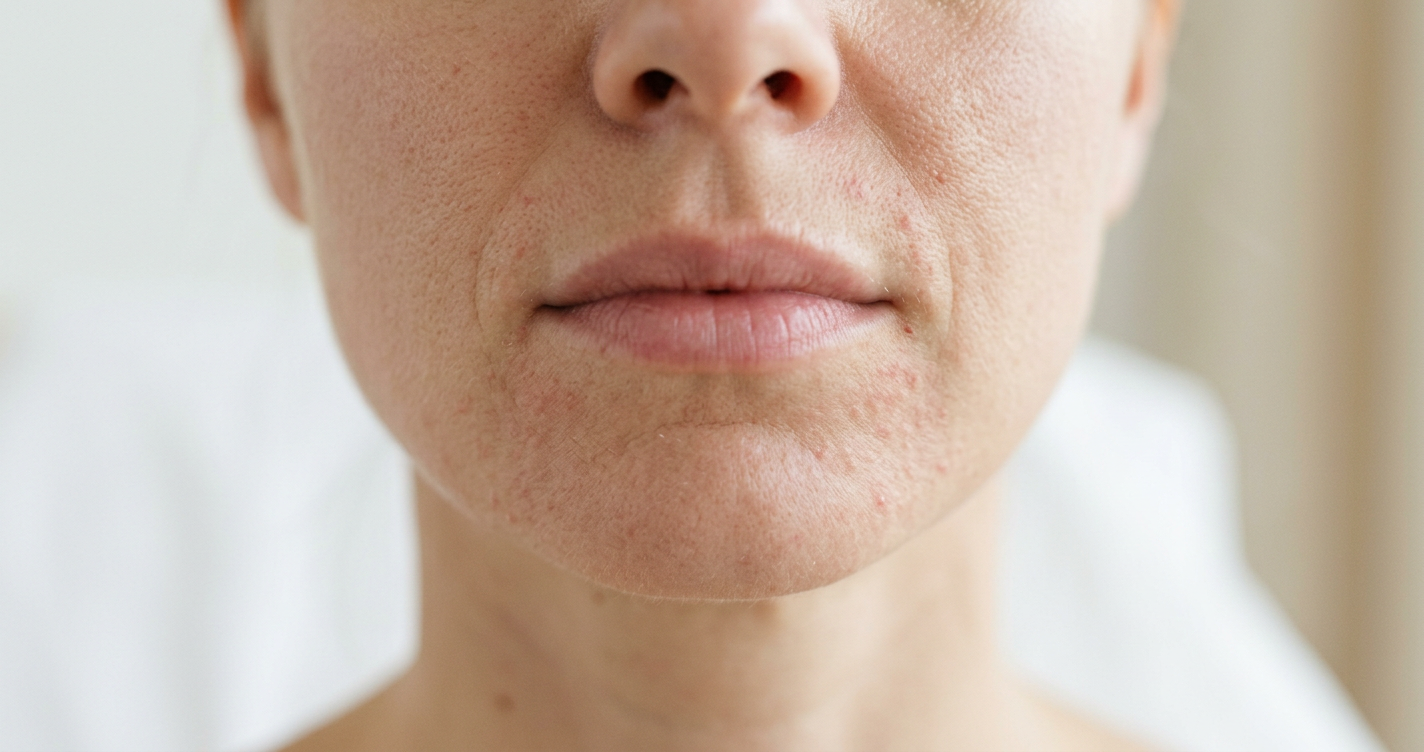
Redness, tiny pustules and an uncomfortable tightness around your mouth – sound familiar? You're not alone.
Perioral dermatitis affects a surprising number of people, especially women between 20 and 45, and is often mistaken for acne or rosacea.
The tricky part: The more skincare products you apply, the more stubborn the condition becomes. Less really is more here – and the right knowledge is the first step toward healing.
In this article, you'll learn how to recognise perioral dermatitis, what triggers it, and how to bring your skin back into balance, step by step.
Perioral Dermatitis: When Your Skin Around the Mouth Fights Back
Redness around your mouth, small pustules, and a persistent tightness that just won't go away – even though you cleanse and moisturise every day. If this sounds like you, you're far from alone.
What many people initially mistake for acne or dry skin is often perioral dermatitis – sometimes called perioral eczema or even the "flight attendant disease". That last nickname comes from the fact that this skin condition was once particularly common among women who wore heavy makeup and rich creams on a daily basis.
The good news: You don't have to simply accept these stubborn patches of redness. With the right knowledge and a gentle, targeted skincare routine, you can give your skin real relief.
What Is Perioral Dermatitis – and Why Is It Called the "Flight Attendant Disease"?

Perioral dermatitis is an inflammatory skin condition of the face, typically presenting as patchy redness, small pustules, and a slight feeling of tightness around the mouth.
The name is quite self-explanatory: perioral comes from Latin and simply means "around the mouth" – exactly where the inflammation most commonly appears. It can sometimes spread to the chin, nasal folds, or cheeks as well.
Perioral dermatitis is far from rare. It mainly affects women between 20 and 45, although men and children can develop it too.
The historical nickname "flight attendant disease" originates from observations in the 1960s and 1970s. Doctors noticed that women with intensive skincare routines – heavy makeup, rich creams, frequent cleansing – were disproportionately affected. Flight attendants were seen as the embodiment of these grooming habits at the time.
Today we know: Certain ingredients and an overly intensive skincare routine can disrupt the delicate skin barrier and encourage inflammation on the face. This isn't about blame – it's a reminder that sometimes less truly is more.
Many Names, One Condition
Whether you call it perioral dermatitis, perioral eczema, or the "flight attendant disease" – all three terms describe the same condition. The variety of names often causes confusion when you're searching online for answers.
The key takeaway: Behind each of these names is the same picture – red, inflamed skin around the mouth, sometimes accompanied by small pustules or flaking. Know one term, and you know them all.
Recognising the Symptoms: What Perioral Dermatitis Looks Like
 The symptoms of perioral dermatitis are quite distinctive – once you know what to look for, you can often spot it at a glance.
- Redness around the mouth, sometimes extending to the nose and eyes
- Small blisters and papules – tiny, raised bumps that feel inflamed
- Burning and itching, especially after applying skincare products
- A characteristic clear strip right along the lip border – the skin immediately adjacent to the lips is usually spared
- Mild flaking or dry patches within the reddened areas
- The skin often gets worse after applying creams or during stressful periods
Because the facial skin in perioral dermatitis can look similar to other conditions, this overview can help you tell them apart:
| Feature | Perioral Dermatitis | Acne | Rosacea |
|---|---|---|---|
| Location | Around mouth, nose, eyes | Forehead, cheeks, chin | Cheeks, nose |
| Blisters/Papules | Yes, small clusters | Yes, sometimes large | Rare |
| Clear strip at lips | Typical | No | No |
| Triggers | Creams, cortisone | Sebum, bacteria | Heat, alcohol |
A self-diagnosis is never a substitute for seeing a dermatologist. If you recognise yourself in these symptoms, have your skin examined professionally – for a reliable diagnosis and the right treatment path.
Perioral Dermatitis, Acne, or Rosacea – What's the Difference?
Perioral dermatitis, acne, and rosacea all cause facial redness – but the differences are crucial for getting the right diagnosis.
| Feature | Perioral Dermatitis | Acne | Rosacea |
|---|---|---|---|
| Location | Around mouth, nose, eyes | Forehead, cheeks, chin | Cheeks, nose |
| Papules & blisters | Yes, small clusters | Yes, sometimes large | Rare |
| Clear strip at lips | Typical | No | No |
| Triggers | Creams, cortisone | Sebum, bacteria | Heat, alcohol |
A self-diagnosis is never a substitute for seeing a dermatologist. If you recognise yourself in these symptoms, have your skin examined professionally – for a reliable differential diagnosis and the right treatment path.
Causes and Triggers: What's Behind Perioral Dermatitis?
 The exact cause of perioral dermatitis hasn't been fully established by science – which can make finding your personal trigger feel like genuine detective work.
What we do know: There are a number of triggers that can throw the delicate skin barrier around your mouth, nose, and eyes off balance and promote inflammation.
- Cortisone-based creams – this is the most important warning: cortisone may soothe the redness in the short term, but it significantly worsens perioral dermatitis in the long run. Using cortisone products on the face risks a so-called rebound effect when you stop.
- Rich skincare products – heavy creams containing emulsifiers, silicones, or mineral oils can overwhelm the skin barrier and fuel the inflammation.
- Fluoride toothpaste – contact with fluoride is considered a possible trigger, particularly for sensitive skin around the mouth.
- Hormonal fluctuations – your menstrual cycle, the pill, or hormonal changes during menopause can all influence your skin.
- Stress – it weakens your skin's immune defences and makes it more susceptible to irritation.
- UV radiation – sun exposure can aggravate existing symptoms.
- Makeup and cosmetics – certain ingredients in foundations or concealers further irritate skin that is already sensitised.
Cortisone: When the Cream Makes It Worse
Cortisone is one of the most common traps with perioral dermatitis – and one of the most dangerous. Many people reach for a cortisone cream because it alleviates redness in the short term.
The problem: it makes perioral dermatitis significantly worse over time. When you stop using it, you risk a so-called rebound effect, where your skin reacts even more intensely than before.
If you're currently using – or have used – cortisone products on your face, that is often a central cause of ongoing symptoms – and the first step toward improvement begins with consistently avoiding them.
Treatment and Zero Therapy: How to Get Rid of Perioral Dermatitis
The road to recovery from perioral dermatitis often starts with letting go of everything. That sounds counterintuitive – but it's the essence of the proven zero therapy approach.
Stop all suspect products (Zero Therapy) Consistently cut out all creams, serums, makeup, and cleansing products on the affected area. Just lukewarm water for washing – nothing more.
Important to know: During the first few days, your skin may initially react more strongly and the perioral dermatitis may temporarily worsen. This is normal and not a sign that you're doing something wrong. Your skin simply needs time to recover.
See a dermatologist Without a professional diagnosis, you're often left guessing. A dermatologist can reliably identify perioral dermatitis and, if necessary, initiate targeted treatment – for example with topical metronidazole or, in more pronounced cases, an oral antibiotic such as doxycycline.
This treatment works, but it takes time.
Less is more – especially with perioral dermatitis.
Patiently calm your skin Healing is not a sprint. Realistically expect weeks to months before you see noticeable improvement.
Gentle, minimalist skincare without irritating ingredients supports the process – but only if it's truly well-tolerated. Step by step, without pressure.
Zero Therapy: A Systematic Reset – What It Means
Zero therapy is the cornerstone of any successful treatment of perioral dermatitis: you consistently stop all skincare products on the affected area and cleanse your skin exclusively with lukewarm water.
What sounds radical at first has a clear purpose – only when you eliminate all potential triggers can your skin truly recover. During the first few days, expect a temporary worsening of your skin: this isn't a setback, it's part of the process.
This minimalist skincare pause creates the foundation on which any further treatment can actually take effect.
How Long Does Healing Take?
Treating perioral dermatitis takes time – that's the most honest answer. With consistent therapy and zero therapy, initial improvements typically appear after two to four weeks.
A complete recovery, however, often takes two to three months. Don't be discouraged. If your skin shows little progress after four weeks, it's worth seeing a dermatologist.
Protective Skincare for Perioral Dermatitis: What Can You Put on Your Skin?
With perioral dermatitis, the rule is: less is more. Your facial skin doesn't need an elaborate skincare routine during this phase – it needs rest above all, and gentle, non-irritating care.
Ingredients and products to avoid:
- Cortisone-based creams (worsen perioral dermatitis in the long run)
- Perfume and fragrances – even "natural" scents can trigger irritated skin
- Silicones and heavy oils – they form a film that can place additional stress on the skin
- Fluoride toothpaste – minimise contact with the mouth area when brushing
- Makeup containing bismuth oxychloride – this filler is suspected of encouraging flare-ups
- Harsh foaming cleansers – they disrupt the skin's natural protective barrier
What your facial skin needs right now:
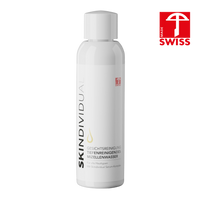
- Gentle, residue-free cleansing – the SKINDIVIDUAL micellar water removes impurities without rubbing or irritation
- Minimal care with few, clearly declared ingredients
- Gentle formulations free from alcohol, preservatives, and unnecessary additives
- Sun protection with mineral filters rather than chemical UV absorbers
Before you introduce any new products into your routine, it's best to discuss it with your dermatologist – that way you stay on the safe side and avoid unnecessary setbacks.
Ingredients to Avoid with Perioral Dermatitis
Not all skincare ingredients are suitable for irritated facial skin. With perioral dermatitis, certain substances can actively fuel flare-ups:
- Cortisone-based creams – soothing in the short term, counterproductive in the long run
- Perfume and fragrances – even "natural" scents irritate sensitive facial skin
- Silicones and heavy oils – form a film that places additional stress on the skin
- Harsh foaming cleansers – attack the skin's natural protective barrier
- Fluoride toothpaste – minimise contact with the mouth area when brushing
- Bismuth oxychloride in makeup – suspected of encouraging flare-ups
- Alcohol in skincare products – dries out the skin and weakens the skin barrier
Gentle Cleansing as the First Step Toward Calm
With perioral dermatitis, cleansing is the first and most important step toward calming your skin – and at the same time, the step where the most mistakes are made.
The SKINDIVIDUAL micellar water cleanses facial skin gently and thoroughly, without attacking the protective barrier. No aggressive surfactants, no alcohol, no perfume – just effective skincare that even sensitive skin can tolerate.
Frequently Asked Questions About Perioral Dermatitis
Is perioral dermatitis contagious?
No, perioral dermatitis is not contagious. It is an inflammatory skin condition caused by internal and external triggers – not by bacteria or viruses that can be transmitted.
Can diet affect perioral dermatitis?
Yes, certain foods such as sugar, alcohol, or highly processed products can promote inflammation in the body and worsen symptoms. A balanced, anti-inflammatory diet can support your skin from within.
Can I wear makeup with perioral dermatitis?
It's best not to – at least not on the affected areas. Many makeup products contain ingredients that further irritate the skin and slow down healing.
When should I see a dermatologist?
If your symptoms don't improve after two to three weeks despite gentle care and zero therapy, a professional diagnosis is a wise move. With severe redness or pustules, don't wait too long.
Can perioral dermatitis come back?
Yes, unfortunately perioral dermatitis tends to recur – especially if the original triggers aren't consistently avoided. With the right skincare routine and awareness of your triggers, you can significantly reduce the risk.
Frequently Asked Questions
Is perioral dermatitis contagious?
No, perioral dermatitis is not contagious. It is an inflammatory skin condition caused by internal and external triggers – not by bacteria or viruses that can be transmitted.
Can diet affect perioral dermatitis?
Yes, certain foods such as sugar, alcohol, or highly processed products can promote inflammation in the body and worsen symptoms. A balanced, anti-inflammatory diet can support your skin from within.
Can I wear makeup with perioral dermatitis?
It's best not to – at least not on the affected areas. Many makeup products contain ingredients that further irritate the skin and slow down healing.
When should I see a dermatologist?
If your symptoms don't improve after two to three weeks despite gentle care and zero therapy, a professional diagnosis is a wise move. With severe redness or pustules, don't wait too long.
Can perioral dermatitis come back?
Yes, unfortunately perioral dermatitis tends to recur – especially if the original triggers aren't consistently avoided. With the right skincare routine and awareness of your triggers, you can significantly reduce the risk.