
Have you ever wondered why some skin still looks plump and fresh at 45 – while others struggle with dryness and fine lines early on? A key factor lies deep within your skin: hyaluronic acid.
The benefits of hyaluronic acid are truly impressive – a single molecule can bind up to 6,000 times its own weight in water.
What makes it special: hyaluronic acid is not a foreign substance, but a molecule your body produces naturally. It keeps your skin moisturised, elastic and resilient by nature.
The problem? From around age 25, your body's own production noticeably declines – and your skin gradually loses its fullness.
The good news: you can actively support this process. In this article, you will learn:
- how hyaluronic acid actually works
- why molecular weight is crucial
- how to use it correctly to get the very best results
Hyaluronic Acid Benefits: What This Ingredient Really Does for Your Skin
Early morning – you are standing in front of the mirror and notice that the fine lines around your eyes and mouth somehow seem more pronounced than a year ago. Nothing dramatic, but you ask yourself: Could hyaluronic acid really be the ingredient everyone talks about? And does it live up to the hype?
You are not alone in this. Many women from their mid-30s ask exactly these questions – and rightly so. Because those who are well-informed make better decisions about their skincare.
The good news: Hyaluronic acid is one of the most extensively researched ingredients in modern anti-ageing skincare. Its effects on the skin are scientifically proven, yet gentle enough for sensitive skin types.
In this article, you will learn:
- how hyaluronic acid works within your skin
- why it becomes increasingly important as you age
- how to use it truly effectively
So that glance in the mirror becomes a satisfied one again. No empty promises – just well-founded knowledge to help you prevent wrinkles and support your skin long-term.
What Is Hyaluronic Acid – and Why Is It Already Inside You?
 Hyaluronic acid may sound like laboratory chemistry – but it is actually one of the most natural molecules your body knows. It belongs to the family of glycosaminoglycans, long-chain sugar molecules, and is produced by your body itself. You will find it wherever elasticity and moisture are needed: in the skin, in the joints, in the fluid of the eyes.
In short – it is not a foreign substance, but a part of you.
What makes this molecule so remarkable is its extraordinary ability to bind water. No other naturally occurring substance in your body can do this to the same extent:
A single gram of hyaluronic acid can bind up to 6 litres of water – that is up to 6,000 times its own weight.
This very property makes it the central hub for skin moisture and volume. When hyaluronic acid concentration in your skin is high, the skin appears plump, soft and vibrant. The cells are well-nourished and the structure remains stable.
The problem: From around age 25 to 30, your body begins to produce less hyaluronic acid. This decline is gradual – but the consequences are noticeable. The skin loses moisture, becomes thinner and the first fine lines become more visible. At the same time, the regeneration of skin cells also slows down. What used to disappear overnight now stays visible for longer.
Closely linked to this is your skin's collagen network. Hyaluronic acid acts like a filler that supports and keeps the collagen framework moisturised. When hyaluronic acid levels drop, the collagen also loses its support – the skin gives way and contours become softer. These two molecules work hand in hand when it comes to firmness and elasticity.
The good news: this natural process can be specifically supported. High-quality hyaluronic acid in skincare – particularly in different molecular sizes – can replenish from the outside what the body produces less of with age. It penetrates the upper skin layers, stores moisture and gives your skin the foundation it needs for visible regeneration.
So when you integrate hyaluronic acid into your routine, you are not working against your body – you are working with it.
How Hyaluronic Acid Is Produced in the Body and Decreases Over Time
Hyaluronic acid is produced in your body by specialised cells – primarily by fibroblasts in the skin, which continuously build up and break down the molecule. In younger years, this cycle works remarkably efficiently: regeneration runs at full speed, and the skin stays plump and resilient.
But from around age 25 to 30, this balance shifts noticeably. Production decreases – gradually, but steadily.
At the same time, the synthesis of collagen, the structural protein of your skin, also slows down. Both molecules are closely interlinked: when hyaluronic acid levels drop, the collagen framework loses its support and moisture. The result is the first fine lines, less volume and skin that feels generally more tired.
This is precisely where targeted anti-ageing comes in – not as a fight against ageing, but as intelligent support for a natural process that your body already knows and understands.
Natural or Synthetic: How Is Hyaluronic Acid Produced?
Today, hyaluronic acid for skincare is produced almost exclusively through biotechnological fermentation – and that is good news. Natural bacterial cultures, usually Streptococcus equi or Bacillus subtilis, produce the molecule under controlled conditions. The result is a highly pure, vegan hyaluronic acid that is structurally identical to the body's own substance.
In the past, hyaluronic acid was extracted from animal sources – primarily from rooster combs. This method is now considered outdated: the risk of allergies was higher, purity was harder to control, and the ethical concerns were obvious.
Modern fermentation excels in every respect:
- Vegan and cruelty-free
- Consistently high purity
- Sustainable production process
- Precisely controllable molecular size for optimal water retention in the skin
So when you reach for a hyaluronic acid product, you benefit today from a process that is good for both your skin and your conscience.
Hyaluronic Acid Benefits for the Skin: Moisture, Elasticity and More
 Hardly any other ingredient in modern skincare delivers such a versatile and at the same time so well-researched effect as hyaluronic acid. Its secret lies in an extraordinary ability: it binds water – and to an extent that is virtually unique in nature.
A single gram of hyaluronic acid can bind up to six litres of water. For your skin, that means: lasting moisture, noticeable suppleness and a plumping effect that works from within.
This water-binding capacity is the core of all its further benefits – and the reason why hyaluronic acid is indispensable in anti-ageing skincare today.
Moisture That Truly Stays in the Skin
When your skin looks dry, feels tight or fine lines appear more prominent after cleansing, this is usually a sign of insufficient hydration in the upper skin layers.
Hyaluronic acid acts like an intelligent sponge here: it draws moisture from the surrounding environment and locks it precisely where it is needed – in the stratum corneum, the outermost layer of skin. The result is instantly visible: softer, fuller skin that can regenerate from within.
Visibly Smoothing Fine Lines and Wrinkles
With increasing age, the skin loses its natural hyaluronic acid reserves – and noticeably quickly: by the age of 50, the skin often contains less than half the amount it had at 20.
The consequences are wrinkles, volume loss and an overall less firm skin structure. Through targeted external application, skin volume is replenished, fine lines are literally plumped up and appear visibly diminished – entirely without invasive procedures.
Elasticity You Can See and Feel
Well-hydrated skin is more elastic skin. The hyaluronic acid effect on elasticity is direct: when skin cells are adequately supplied with moisture, they can stretch and recover more effectively.
The complexion appears firmer, more youthful and more resistant to external influences such as cold, wind or dry indoor heating.
Regeneration at the Cellular Level
Hyaluronic acid is not merely a passive moisture reservoir – it actively participates in skin regeneration. It supports cell renewal, promotes wound healing and helps strengthen the skin barrier.
Particularly after sun exposure or during stressful periods, when the skin feels tired and thin, high-quality hyaluronic acid skincare can noticeably accelerate recovery.
What matters here is: not all hyaluronic acid works the same way. Molecular size determines how deeply the ingredient can penetrate the skin – and therefore exactly where it takes effect. But more on that in the next section.
Moisture Retention: Why Your Skin Literally Plumps Up
Imagine a dried-out sponge that you dip into water – within seconds it soaks up, expands and becomes supple again. That is exactly how hyaluronic acid works on your skin.
The molecule is an extraordinary water binder: it actively draws moisture from the surrounding air and locks it directly in the upper skin layers. This process – known as water binding – causes your skin to literally plump up, in the very best sense.
The cells are supplied with fluid, gaps fill up and the tissue gains volume. What you see and feel: instantly softer, fuller skin, less pronounced fine lines and a fresher complexion – without a single drop of moisture being lost.
Wrinkles and Elasticity: What the Research Really Says
Moisture alone does not make your skin look younger – more is needed. What researchers have been showing ever more clearly in recent years: wrinkles do not simply result from dryness, but primarily from the gradual loss of collagen and elasticity.
From age 25, your body produces roughly one per cent less collagen each year. That sounds like very little, but over the years it becomes clearly noticeable – the skin becomes thinner, loses its firmness and wrinkles deepen.
The good news: anti-ageing research shows that targeted ingredients can noticeably slow this process. Clinical studies demonstrate that topically applied collagen and low-molecular-weight hyaluronic acid strengthen the skin structure from within. Spilanthol – a plant-based ingredient from the paracress plant – has also shown in studies that it gently dampens muscle contraction at the skin surface, thereby inhibiting the formation of new wrinkles.
Realistically: no cream can turn back time. But with the right ingredients, applied consistently, you can visibly improve your complexion – and this is well supported by science.
Hyaluronic Acid for Different Skin Types – Who Benefits Most?
Hyaluronic acid is one of the most versatile ingredients in modern skincare – and for good reason: it adapts to virtually every skin type.
- Dry skin benefits the most. Hyaluronic acid binds up to 1,000 times its own weight in water and instantly gives rough, dry skin noticeably more moisture and suppleness.
- Oily and combination skin appreciates the light texture: hyaluronic acid serums leave no oily residue and regulate the moisture balance without clogging pores.
- Sensitive skin generally tolerates hyaluronic acid very well – it is gentle, non-irritating and strengthens the natural skin barrier.
- Rosacea-prone skin can benefit from the soothing, anti-inflammatory effects, provided the product is free from alcohol and fragrances.
- Eczema-prone skin needs intensive care – hyaluronic acid supports the barrier function and helps reduce moisture loss.
In short: there is hardly a skin type that does not benefit from targeted hyaluronic acid.
Molecular Weight: Why Not All Hyaluronic Acids Are Equal
 Not all hyaluronic acids are equal – and that is precisely what makes the difference between a product that truly works at depth and one that merely smooths the surface. The molecular weight determines how far an ingredient can penetrate the skin and where it takes effect.
| Property | Low-Molecular HA | High-Molecular HA | Multi-Molecular HA |
|---|---|---|---|
| Molecule Size | Small (< 50 kDa) | Large (> 1,000 kDa) | Combination of both sizes |
| Penetration Depth | Penetrates deep into skin layers | Remains on the skin surface | Works on multiple levels simultaneously |
| Site of Action | Deeper dermis | Epidermis (surface layer) | Surface to deeper layers |
| Typical Application Form | Serum | Cream, gel | Premium serum |
| Key Benefit | Fills wrinkles from within, stimulates collagen production | Instant smoothing, protective moisture film | Immediate effect + long-term deep action |
Remember: The smaller the molecule, the deeper it penetrates – but only the combination of large and small unlocks the full potential of hyaluronic acid.
High-molecular-weight hyaluronic acid forms a protective film over the skin, instantly smooths visibly and prevents precious moisture from evaporating. You can feel this immediately after application.
Low-molecular-weight hyaluronic acid, on the other hand, works at depth: it stimulates the body's own collagen production, plumps fine lines from within and provides lasting elasticity.
Products that combine multiple molecular weights are therefore particularly effective – they address both levels simultaneously. You get the immediate smoothing effect on the surface and at the same time the long-term deep action that brings about real change.
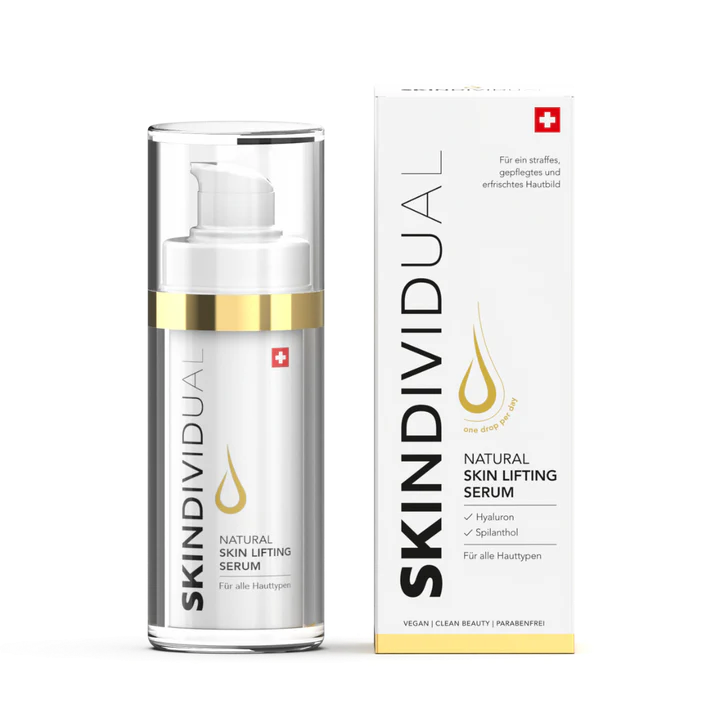
This is precisely the principle behind the Natural Skin Lifting Serum from SKINDIVIDUAL: it combines different hyaluronic acid molecules with other highly effective ingredients – for hyaluronic acid benefits that you not only see, but also feel. So the next time you choose a serum or cream, it is worth looking at the formulation: a single molecular weight is rarely enough.
High-Molecular vs. Low-Molecular: A Direct Comparison
Whether you reach for a serum or a cream – the molecular weight of the hyaluronic acid determines what really happens in your skin.
| Property | High-Molecular HA | Low-Molecular HA |
|---|---|---|
| Molecule Size | Large (> 1,000 kDa) | Small (< 50 kDa) |
| Penetration Depth | Remains on the surface | Penetrates deep into the dermis |
| Site of Action | Epidermis | Deeper skin layers |
| Key Benefit | Instant smoothing, protective moisture film | Fills wrinkles from within, stimulates collagen formation |
| Typical Application Form | Cream, gel | Premium serum |
| Perceptibility | Immediately after application | Long-term, visible over time |
Conclusion: Both molecular sizes have their strengths – only their combination unleashes the full hyaluronic acid benefits: protective on the outside, regenerating on the inside.
So the next time you choose a product, a quick glance at the formulation is well worth it. A single molecular weight only ever covers one level.
Those who use multiple sizes benefit from the immediate smoothing effect and the sustainable deep action simultaneously – and that is precisely the difference you will see in the mirror long-term.
Serum or Cream – Which Application Form Suits You?
Serums and creams differ not just in texture – they address fundamentally different needs of your skin.
A serum is lightweight, highly concentrated and penetrates deep into the skin thanks to its fine molecules. It is the first choice when you want to deliver targeted ingredients such as low-molecular-weight hyaluronic acid or spilanthol directly into the deeper skin layers. The Natural Skin Lifting Serum from SKINDIVIDUAL combines precisely these ingredients – for visible results that reach beyond the surface.
A cream, on the other hand, seals, protects and keeps moisture where it belongs: on the skin surface. It is particularly valuable for dry or sensitive skin that needs extra care and a protective barrier.
The best skincare routine combines both: serum first, cream afterwards. This way you benefit from the deep action and the protective finish – a simple order with a noticeable difference.
Combining Hyaluronic Acid: How to Enhance Its Effects
Hyaluronic acid unleashes its full power when you combine it strategically with other ingredients – because the right synergies transform a good routine into a truly effective one.
Hyaluronic Acid + Vitamin C: Vitamin C is a powerful booster for collagen synthesis – the body's own production of the protein that keeps your skin firm and elastic. If you apply a vitamin C serum before your hyaluronic acid product, you prepare the skin optimally: Vitamin C stimulates, hyaluronic acid locks in the moisture and ensures the skin looks plump and radiant.
Hyaluronic Acid + Retinol: Retinol accelerates cell regeneration and is considered one of the most extensively researched anti-ageing ingredients. However, it can – particularly at the start – cause redness or dryness. This is where hyaluronic acid comes in: it acts as a natural buffer, soothes the skin and compensates for moisture loss. This way you can harness retinol's effects without overwhelming your skin barrier.
Hyaluronic Acid + Niacinamide: Niacinamide – also known as vitamin B3 – strengthens the skin barrier, refines the complexion and has a soothing effect. Combined with hyaluronic acid, it creates a true duo for sensitive or stressed skin: more protection, more moisture, less reactivity.
Hyaluronic Acid + Collagen: Collagen and hyaluronic acid complement each other synergistically – both internally and externally. While hyaluronic acid topically binds moisture, collagen supports the structure and firmness of the skin. If you wish to enhance this effect from within, the Skin, Hair, Nails Complex from SKINDIVIDUAL offers a premium supplement – with collagen, biotin and other nutrients that support your skin holistically.
Seasonal Adjustment: Your skin has different needs in winter compared to summer. During the cold season – when indoor heating and freezing temperatures place great demands on skin moisture – a richer texture with high-molecular-weight hyaluronic acid is perfectly appropriate. In summer, lightweight, water-based serums are the better choice: they nourish without weighing the skin down.
Hyaluronic Acid and Collagen: A Powerful Duo
Hyaluronic acid and collagen are perhaps the most powerful duo in modern skincare – because they complement each other perfectly at a structural level.
Hyaluronic acid binds moisture in the upper skin layers and delivers the visible plumping effect. Collagen, on the other hand, works at depth: it holds the connective tissue together, gives the skin its firmness and slows the natural ageing process.
The problem: from age 25, your body produces less collagen – and that becomes noticeable over time. Topical care alone reaches its limits here.
This is precisely why it pays to think about regeneration from within. The Skin, Hair, Nails Complex from SKINDIVIDUAL combines collagen with biotin and other nutrients that specifically strengthen your skin from the inside – as a meaningful complement to your external routine. This way you counteract collagen breakdown on two levels: externally with hyaluronic acid, internally with targeted nutrition.
Seasonal Application: Why Your Skin Needs More in Winter
Cold outdoor air, dry indoor heating, less sunlight – in winter, your skin is under real stress. The combination of freezing temperatures outside and dry room air inside strips moisture from the skin faster than it can regenerate on its own.
The result: a rough, dull complexion that feels tight and sensitive.
This is precisely why it pays to adjust the application of your skincare products seasonally. What suffices in summer is often too little in winter. Your skincare needs more depth and consistency during the cold months:
- Apply moisture-binding ingredients such as hyaluronic acid morning and evening
- After your skincare, protect the skin with a richer day cream that acts as a barrier against the cold
- Do not forget inner care: nutrients such as biotin and collagen support skin renewal year-round – particularly in winter, when regeneration processes slow down
With the right adjustments, your skin stays well-cared-for, radiant and properly hydrated even in the coldest season.
Hyaluronic Acid in Medicine: Joints, Eyes and More
Hyaluronic acid is far more than a skincare ingredient – it also plays a significant role in medicine. Its natural occurrence in the human body is what makes it so versatile: it is found not only in the skin, but also in the joints, connective tissue and the eyes.
In the joints, hyaluronic acid acts as a natural joint lubricant. The synovial fluid – which surrounds your joints – contains high concentrations of hyaluronic acid and ensures that cartilage and bone glide smoothly against each other.
In osteoarthritis, this protective fluid diminishes, leading to pain and restricted mobility. In orthopaedic medicine, hyaluronic acid injections are therefore administered directly into affected joints to supplement the natural joint lubricant and support cartilage regeneration. Whether and how strongly this therapy works depends on the individual case – a medical assessment is always essential here.
For the eyes, hyaluronic acid is used in the form of eye drops. Its moisture-binding effect makes it a frequently used ingredient for dry eyes, whether from screen work, contact lenses or air-conditioned rooms. It forms a protective film on the eye surface and relieves the uncomfortable feeling of dryness.
Furthermore, hyaluronic acid is used in wound healing, as it possesses anti-inflammatory properties and can promote tissue regeneration.
Important: This article focuses on the topical application of hyaluronic acid in skincare. Medical applications – whether joint injections, eye drops or wound treatment – belong in the hands of healthcare professionals. If you have relevant symptoms, please consult a doctor.
The good news for your daily routine: you can harness the moisture-binding power of hyaluronic acid without a prescription – directly in your skincare.
Hyaluronic Acid for Osteoarthritis and Joint Pain
Hyaluronic acid is not only a key ingredient in skincare – it also plays a crucial role in your joints. The synovial fluid that surrounds your joints naturally contains high levels of hyaluronic acid. It acts there as a natural joint lubricant and ensures that cartilage and bone glide smoothly against each other.
In osteoarthritis, this protective fluid changes: its concentration and quality decrease, which can cause pain and restricted mobility. This is exactly where orthopaedic medicine intervenes – with targeted hyaluronic acid injections directly into the affected joint, to supplement the natural joint lubricant and support cartilage regeneration.
How strongly this therapy works varies from person to person. The effect depends on the severity of the osteoarthritis and other personal factors. A medical assessment is absolutely necessary here – this treatment belongs in professional hands.
Protection and Clear Vision: Hyaluronic Acid in the Eyes
Your eyes also benefit from the effects of hyaluronic acid – and in a very direct way. The vitreous body of your eye consists largely of a gel-like mass in which hyaluronic acid occurs naturally. It keeps the tissue moist, stable and protected.
In ophthalmology, hyaluronic acid is used specifically as an ingredient in eye drops – particularly for dry or irritated eyes. It forms a protective film over the cornea, retains moisture and supports the regeneration of the delicate eye tissue.
Anyone who spends a great deal of time in front of screens or suffers from environmental factors will know the uncomfortable burning and scratching – this is precisely where hyaluronic acid can bring noticeable relief. It is also used as an aid in certain eye surgeries to protect tissue and promote healing.
Frequently Asked Questions
How quickly does hyaluronic acid work on the skin?
That depends on what you are hoping for. An immediate effect – more moisture, a plumper skin feel – can often be noticed after the very first application.
For visible improvements in fine lines and wrinkles, dermatologists recommend giving a product at least four to six weeks of regular use. The benefits of hyaluronic acid unfold best when you consistently integrate it into your daily skincare routine.
Can I use hyaluronic acid every day?
Yes – and that is precisely what is recommended. Hyaluronic acid is one of the most tolerable ingredients in skincare. You can use it morning and evening.
Applied to damp skin, it delivers its moisture-binding effect most effectively. The [Natural Skin Lifting Serum from SKINDIVIDUAL](https://skindividual.ch) is formulated to integrate seamlessly into your daily routine – gentle, effective and without compromise.
Does hyaluronic acid have side effects?
No need to worry – hyaluronic acid is considered exceptionally well tolerated because it is a substance your body produces naturally. Adverse reactions are very rare and usually relate to other ingredients in the product, not the hyaluronic acid itself.
If you have sensitive skin, it is worth checking the full ingredient list – and opting for clean, well-formulated products.
Is hyaluronic acid safe during pregnancy?
Topically applied hyaluronic acid – as a cream, serum or gel on the skin – is generally considered safe during pregnancy, as it does not enter the bloodstream in any significant amount.
For supplements or medical applications, it is always advisable to consult your doctor. When in doubt: better to ask one too many times.
Can I eat or drink hyaluronic acid?
Yes, that is possible – and even sensible. Hyaluronic acid as a dietary supplement can help support the body's own production and hydrate the skin from within.
The [Skin, Hair, Nails Complex from SKINDIVIDUAL](https://skindividual.ch) combines hyaluronic acid with other key ingredients such as biotin and collagen – for holistic care that starts on the inside and becomes visible on the outside.
Why does my hyaluronic acid cream leave white residue?
This is a common phenomenon and not a sign of a poor product.
Hyaluronic acid draws moisture from the surrounding environment. When the air is very dry or the product is applied too thickly, small white residues can appear as it dries.
Tip: apply the serum to slightly damp skin and seal it afterwards with a moisturiser – this ensures even absorption.
Does hyaluronic acid cause dependency?
This myth persists – but it is simply not true. Hyaluronic acid does not cause dependency. Your skin does not stop its own production just because you use a hyaluronic acid serum.
What you may perceive: when you stop using the product, the external moisture boost is missing – and the skin feels drier than during use. That is not withdrawal, but perfectly normal physiology. All the more reason to keep going.
How quickly does hyaluronic acid show results?
You can often feel initial results after the very first application: skin moisture increases noticeably, and the skin feels plumper and softer.
The long-term benefits of hyaluronic acid – visibly fewer fine lines, a more even complexion – require a little more patience. Dermatologists recommend giving a product at least four to six weeks of regular use before drawing conclusions. Consistency pays off: those who apply it daily see the best results.
Does hyaluronic acid have side effects?
Hyaluronic acid is extremely well tolerated by most skin types – genuine side effects are rare. Since the ingredient is naturally produced by the body, the skin rarely reacts with intolerance.
In rare cases, very sensitive skin may experience slight redness or a feeling of tightness, particularly during initial use. This usually subsides quickly. Make sure to apply hyaluronic acid to slightly damp skin – this way it delivers its full effect without drying the skin out.
Is hyaluronic acid safe during pregnancy?
Topically applied hyaluronic acid is considered safe during pregnancy – since the ingredient is naturally produced by the body and barely penetrates deeper skin layers, the risk of a systemic effect is minimal. There is therefore little reason to avoid it as a daily moisturiser.
Nevertheless, it is advisable to check with your gynaecologist or midwife, just to be safe – they know your individual situation best.
Can I use hyaluronic acid every day?
Yes – you can safely use hyaluronic acid every day, morning and evening. The ingredient is so well tolerated that even sensitive skin benefits without any problems.
Apply the serum or gel ideally to slightly damp skin, so the hyaluronic acid can bind moisture optimally. Regular use is the key to visible results: only through daily routine does the long-term plumper, better-hydrated skin emerge.
Myth or fact: Does topically applied hyaluronic acid really make a difference?
Fact – and a well-documented one. Studies show that hyaluronic acid in low-molecular-weight form can indeed penetrate deeper skin layers and store moisture there. The result: visibly fewer wrinkles, a plumper skin structure and a more even complexion.
Higher-molecular-weight variants act as a protective film on the surface and reduce moisture loss. The combination of both molecular sizes – as used in highly effective anti-ageing serums – therefore delivers the strongest effect.
In short: those who regularly use hyaluronic acid are investing in demonstrably better skin hydration and a long-term more youthful appearance.
Hyaluronic acid taken internally: Does it actually help?
You do not have to apply hyaluronic acid only to the skin – you can also let it work from within. Studies show that orally taken hyaluronic acid supports the body's own production and measurably improves skin moisture.
Particularly interesting: in combination with collagen and biotin, it delivers a synergistic anti-ageing effect that is difficult to achieve from the outside alone:
- Collagen strengthens the skin structure - Biotin promotes elasticity and cell regeneration - Hyaluronic acid binds moisture deep in the skin
Together, they form a powerful trio for sustainably radiant skin. The [Skin, Hair, Nails Complex](https://skindividual.ch) from SKINDIVIDUAL combines precisely these ingredients in a carefully balanced formula. This way you care for your skin holistically – inside and out.