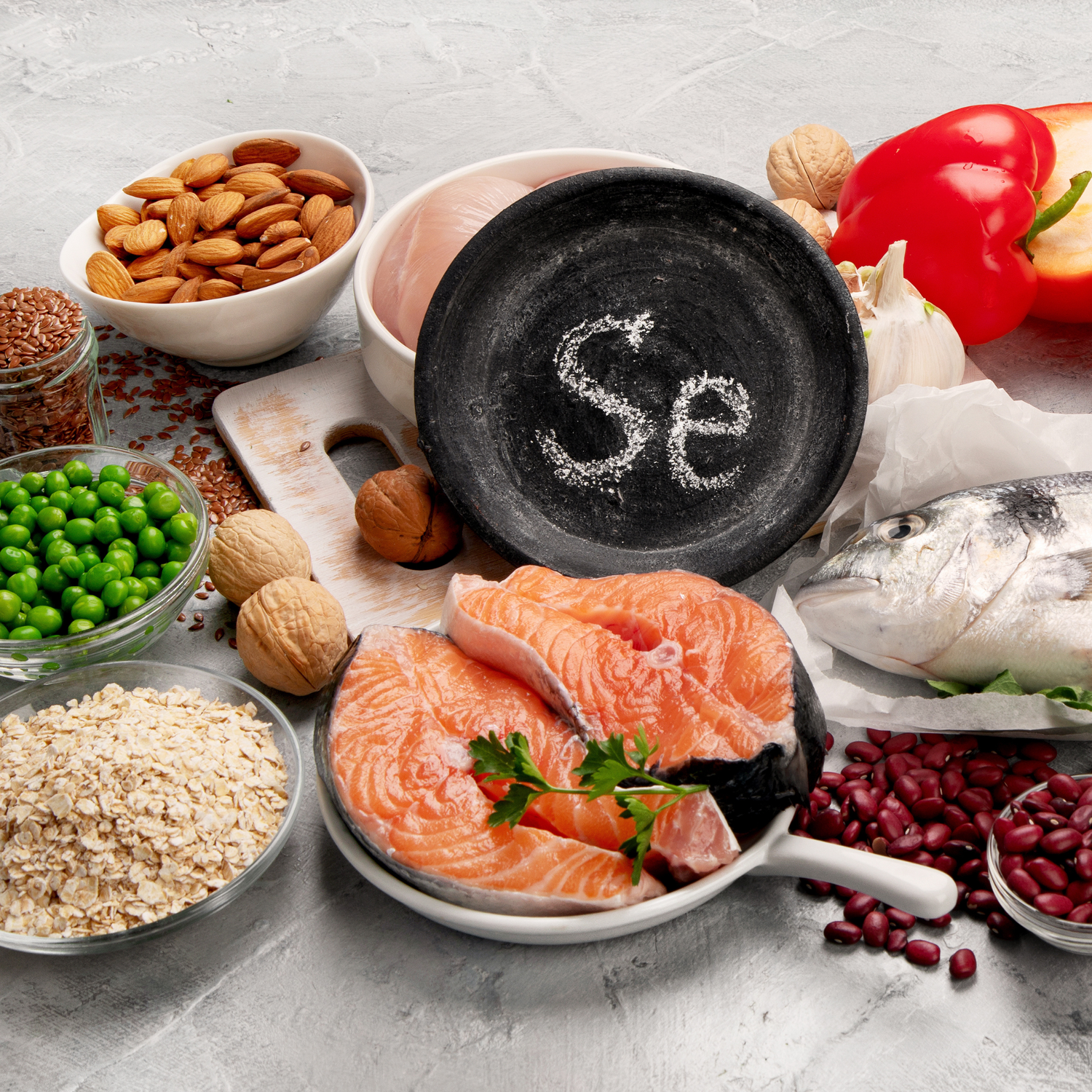
The selenium effect on your body is impressive: this essential trace element protects your cells from oxidative stress, supports the thyroid, and plays a key role in your immune system, skin, and hair. Nevertheless, few people know that in many places in Europe, the soils are selenium-poor – and a deficiency can creep in silently. In this guide, you will learn everything about the effect of selenium, the best selenium-rich foods, your daily requirement, and how to recognize a selenium deficiency in time.
What is Selenium?
Selenium is a vital mineral and belongs to the essential trace elements. This means: your body cannot produce it itself and is dependent on intake via nutrition. Chemically speaking, selenium is a metalloid that occurs in nature in rocks and soils. From there, it enters plants and reaches us humans through the food chain.
Although your body needs only tiny amounts daily (in the microgram range), selenium is involved in over 25 different enzymes – the so-called selenoproteins. These control vital processes like detoxification, hormone activation, and cell protection. The European Food Safety Authority (EFSA) classifies selenium as an indispensable nutrient.
Good to know: The selenium content in foods fluctuates strongly depending on how rich in selenium the soils in the growing region are. In Switzerland and large parts of Europe, the soils are rather selenium-poor – one more reason to consciously pay attention to a selenium-rich diet.
Selenium Effect on the Body
Think of selenium like an invisible protective shield: it neutralizes free radicals, preserves the integrity of your cell membranes, and controls vital biochemical reactions. Here are the most important effects of selenium at a glance:
Antioxidant Cell Protection
Selenium is a central component of the enzyme glutathione peroxidase, which renders free radicals harmless. These aggressive oxygen compounds arise through UV radiation, stress, environmental toxins, and natural metabolic processes. Without sufficient selenium, oxidative stress increases – and with it the risk of premature skin aging and cell damage.
Thyroid Support
The thyroid contains more selenium per gram of tissue than any other organ. The trace element is needed to convert the inactive thyroid hormone T4 into active T3. T3 controls your basal metabolic rate, energy production, and your entire metabolism. A selenium deficiency can therefore lead directly to thyroid problems – a topic that particularly concerns women in menopause.
Strengthening the Immune System
Selenium stimulates the formation of T-cells and antibodies and thus strengthens your defenses. Studies show that a sufficient selenium supply can reduce the duration and severity of infections. If you additionally want to protect yourself against colds, a look at the combination with other immune-strengthening nutrients is worthwhile.
Beautiful Skin, Hair, and Nails
As a component of keratin – the basic building block of hair and nails – selenium ensures strong substance and healthy growth. At the same time, the antioxidant effect reduces inflammation in the skin, which can help in case of acne, redness, and dull complexion. Anyone suffering from hair loss should absolutely have their selenium status checked.
Fertility and Pregnancy
Selenium improves sperm quality in men and supports the maintenance of a healthy pregnancy in women. The combination with folic acid also plays an important role in pregnancy.
Detoxification and Binding of Heavy Metals
Selenium binds heavy metals like mercury, cadmium, and lead and facilitates their excretion via the liver and kidneys. Especially in an era where we are exposed to environmental toxins daily, this function is particularly valuable.
Cardiovascular Protection
Selenium reduces inflammatory markers in the blood, stabilizes vessel walls, and can thus lower the risk of cardiovascular diseases. Here too, the antioxidant effect plays a central role.
Selenium-Rich Foods: The Best Sources
Fast, tasty, and uncomplicated – these foods naturally provide particularly high amounts of selenium. The following overview shows you which products cover your daily requirement without having to rely on dietary supplements.
Brazil Nuts – The Selenium Champions
A single Brazil nut (approx. 5 g) contains around 90 µg of selenium and thus covers more than the daily requirement. Thanks to high portions of healthy fatty acids, Vitamin E and biotin they are a true all-rounder. Attention: due to the extremely high selenium content, you should not eat more than 2 Brazil nuts per day.
Fish and Seafood
Fish is among the best selenium sources ever:
- Tuna: up to 90 µg per 100 g
- Salmon: approx. 40–60 µg per 100 g
- Cod: approx. 30–50 µg per 100 g
- Shrimp: approx. 40 µg per 100 g
Fish additionally provides omega-3 fatty acids and high-quality protein – a perfect combination for beautiful skin.
Meat and Offal
100 g of liver or kidney contain up to 80 µg of selenium. Normal beef or chicken also provide solid 15–30 µg per 100 g.
Sunflower Seeds and Sesame
Two tablespoons provide around 30 µg of selenium. Perfect as a topping for salads, muesli, or snacking.
Eggs and Dairy Products
A medium-sized egg provides about 20 µg of selenium, 150 g of natural yogurt another 8 µg. Gouda is a solid selenium supplier among cheeses.
Legumes and Cereals
Lentils, chickpeas, and oatmeal score points with 8–12 µg per 100 g. Thus, the daily requirement can also be covered purely plant-based – ideal for vegans and vegetarians.
Cooking tip: Selenium is heat-stable but water-soluble. Steaming or stewing preserves more vitamins than long boiling in plenty of water.

Recognizing Selenium Deficiency: Typical Symptoms
A selenium deficiency usually develops insidiously over weeks and months. Symptoms are often non-specific, which is why a deficiency frequently goes unnoticed for a long time. Watch out for these warning signs:
Skin, hair, and nails:
- Brittle, white spots on the nails
- Dull, thinning hair to hair loss
- Dull, dry, and sensitive skin
Immune system and energy:
- Frequent colds and infections
- Persistent fatigue and exhaustion
- Decreased performance and concentration problems
Thyroid and hormones:
- Weight gain without changed diet
- Sensitivity to cold
- In women: irregular cycles, especially during menopause
- In men: reduced sperm quality
Mood:
- Irritability and mood swings
- Depressive moods (selenium can reduce inflammation in the brain)
If you notice several of these symptoms, have your selenium status checked by a doctor via a blood test. Measuring the selenium concentration in whole blood gives you clarity.

Selenium Daily Requirement: How Much Do You Really Need?
The German Nutrition Society (DGE) and EFSA recommend the following guidelines for daily selenium intake:
| Person Group | Recommended Daily Requirement |
|---|---|
| Women aged 15 and up | 60 µg |
| Men aged 15 and up | 70 µg |
| Pregnant women | 60 µg |
| Breastfeeding women | 75 µg |
| Children (1–10 years) | 15–30 µg |
Risk groups for selenium deficiency:
- Vegans (restricted selection of selenium-rich foods)
- People with gastrointestinal diseases (decreased absorption)
- Elderly people (reduced nutrient absorption)
- Pregnant and breastfeeding women (increased requirement)
- Athletes (increased consumption due to oxidative stress)
Tips for Optimal Absorption
So that your body can optimally utilize selenium, not only the quantity counts, but also the right time and combination with other nutrients.
Timing It is best to take selenium-rich foods or supplements with a meal. A protein- or Vitamin C-rich meal significantly improves absorption. Morning or noon is ideal, as the body is then most active in absorbing nutrients.
Bioavailability Organic selenium compounds like selenium methionine (from animal sources) and selenium yeast are absorbed better than inorganic forms like sodium selenite. In terms of nutrition: animal selenium sources like fish and eggs are utilized slightly better than plant-based ones.
Observe Interactions
- Vitamin C and E improve selenium absorption
- Zinc and selenium complement each other synergistically
- Sulfurous compounds (e.g., in cabbage) can slightly inhibit absorption
- High doses of individual minerals can impair the absorption of others
Supplementation: When does it make sense? Not everyone needs a selenium preparation. Before you supplement, you should first optimize your nutrition. If you eat selenium-rich (e.g., 2 Brazil nuts daily + regular fish), you usually cover your requirement without problems. In case of proven deficiency (blood test!), preparations with 50–100 µg can be useful.
Caution overdose: The upper safe limit is 300 µg per day (according to EFSA) or 400 µg (according to WHO). Symptoms of selenium oversupply (selenosis) are nausea, metallic taste, brittle nails, and hair loss – ironically, symptoms similar to a deficiency.
Everyday Tips: Bringing Selenium Relaxed into Your Day
Whether you like to cook in advance, snack, or celebrate breakfast – with these tips, you integrate selenium effortlessly into your everyday life.
The 3-2-1 Rule
- 3 meals per week with fish or seafood
- 2 Brazil nuts daily (no more!)
- 1 handful of sunflower seeds or cashews as a snack
Selenium-Booster Breakfast
Oatmeal with natural yogurt, one chopped Brazil nut, sunflower seeds, and a dash of orange juice provide over 70 µg of selenium – and taste fantastic.
Meal-Prep-Magic
A lentil curry on Sunday provides selenium, protein, and fiber all week. Combined with brown rice and a topping of toasted sesame, it becomes a selenium-power meal.
Smart Snack-Swap
Replace chips and pretzels with cashews, sunflower seeds, or a Brazil nut. Your immune system and your skin will thank you for it.
Food-Pairing for Maximum Effect
Combine selenium-rich foods with Vitamin C sources: peppers, oranges, or kiwi with fish, a dash of lemon over salad with sunflower seeds. Thus, you increase the bioavailability of selenium.
Tracking Made Easy
Apps like Cronometer or MyFitnessPal show you at a glance how much selenium you are taking in daily. Especially helpful if you are currently changing your nutrition.
Frequently Asked Questions
Can I overdose on selenium? Yes, but usually only with long-term high supplementation (over 400 µg per day). Overdose via normal nutrition is hardly possible – with the exception of Brazil nuts: already 5–6 pieces daily can exceed the safe range. Warning signs are nausea, brittle nails, hair loss, and a metallic taste in the mouth.
Is selenium a problem for vegans? Not necessarily, but it requires more attention. The best plant-based selenium sources are Brazil nuts, sunflower seeds, sesame, brown rice, and enriched foods. Since plant-based foods overall contain less selenium than animal ones, a conscious selection is particularly important.
What is selenium good for in case of skin problems? Selenium has an antioxidant and anti-inflammatory effect. It can help with acne, rosacea, premature skin aging, and dull complexion by neutralizing free radicals and reducing inflammatory processes in the skin. If you want to learn more about nutrition for beautiful skin, you will find further tips in our guide.
Does selenium influence mood? Yes. Studies indicate that selenium can reduce inflammatory processes in the brain that are linked to depressive moods. People with sufficient selenium supply report more frequently about better mood and less anxiety.
How do I know if I'm getting enough selenium? The safest way is a blood test at the doctor's. Optimally, the selenium concentration in whole blood is 100–140 µg/l. Values below 80 µg/l indicate a deficiency.
Conclusion: Selenium Effects at a Glance
Selenium is a true all-rounder among vitamins. It provides energy, keeps your nervous system going, and visibly supports the health of hair, skin, and nails. Selenium effects extend to the entire body – from cell division and metabolism to keratin formation.
In most cases, a balanced diet with eggs, whole-grain products, nuts, and green vegetables is enough to cover the daily requirement of around 40 µg. If you suffer from selenium deficiency symptoms such as hair loss, brittle nails, or skin problems, targeted supplementation can be useful – ideally in the range of 500–1,000 µg per day.
Selenium side effects are practically not to be feared with normal dosage. With very high doses, however, you should inform your doctor to avoid distorted laboratory values.
If you rely on a selenium-rich lifestyle, you benefit from the inside out: strong hair, strong nails, and resilient skin are then not products of chance, but the result of an optimally supplied cell structure.